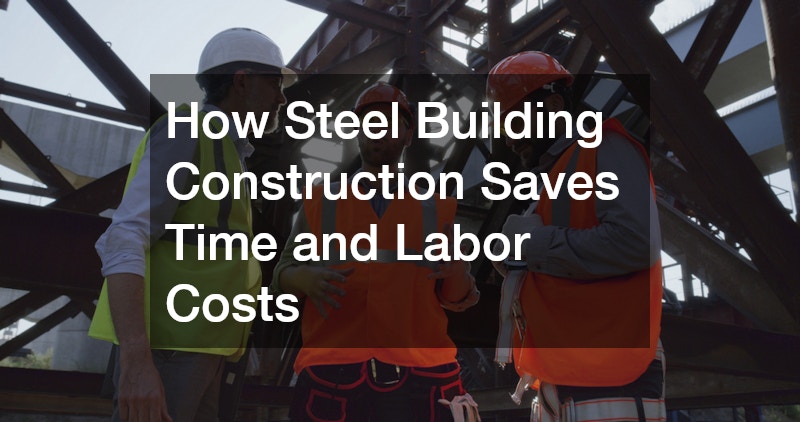
Construction timelines have become one of the most important considerations in modern development. Businesses, developers, and property owners all want buildings completed quickly without sacrificing durability or performance. Delays increase costs, push back project launches, and often create labor challenges.
This is where steel building construction stands out. By combining precision manufacturing with efficient on-site assembly, steel structures significantly reduce the time and labor required to complete a project.
From warehouses and commercial buildings to agricultural facilities and workshops, steel has become one of the most efficient construction materials available.
The speed and efficiency of steel-based projects come from several factors, including prefabrication, simplified assembly, reduced workforce needs, and fewer unexpected delays.
Prefabrication Streamlines the Construction Process
Components Are Manufactured Before Arrival
One of the biggest advantages of steel building construction is the prefabrication process. Structural components such as beams, columns, and panels are manufactured in controlled factory environments before they ever reach the job site.
Because these components are produced using advanced machinery and precise measurements, they arrive ready to be assembled. This eliminates the need for extensive cutting, shaping, or adjustments during construction.
Traditional building materials like wood or concrete often require significant on-site preparation, which adds time and labor to a project. Steel components, on the other hand, are designed to fit together according to detailed engineering plans, allowing construction crews to work efficiently and avoid unnecessary delays.
Less On-Site Fabrication Means Faster Progress
When most of the fabrication work happens off-site, construction teams can focus entirely on assembly. This reduces the number of steps required during the building process and allows projects to move forward at a much faster pace.
Fewer tasks on-site also reduce the likelihood of errors, which helps prevent costly corrections and project slowdowns.
Faster Assembly Reduces Labor Requirements
Simplified Structural Systems
Steel buildings are designed with simplicity and efficiency in mind. Many steel structures use bolt-together systems that make assembly straightforward for experienced crews.
Because the pieces are engineered to connect precisely, workers can install structural components quickly without the time-consuming adjustments often required with other materials.
This efficiency allows smaller teams to complete tasks that might otherwise require larger labor forces. For contractors and developers, that translates into meaningful savings in labor costs.
Shorter Construction Timelines
Steel building construction often reduces project timelines by weeks or even months compared to traditional construction methods. Faster timelines mean fewer labor hours and lower project management costs.
Projects that finish earlier also allow businesses to begin operations sooner, which can generate revenue faster and reduce financing expenses tied to prolonged construction schedules.
Reduced Material Waste Saves Time and Money
Precision Engineering Limits Waste
Steel components are manufactured to exact specifications. Because of this precision, there is far less material waste during construction.
Traditional building methods frequently involve cutting materials to fit on-site, which can lead to leftover scraps and additional cleanup work. In contrast, steel building construction relies on components that are already sized and shaped for the project.
This efficiency reduces the time workers spend handling excess materials and managing disposal.
Cleaner Job Sites Improve Efficiency
Construction sites that use steel components tend to remain more organized and manageable. With fewer raw materials scattered across the site, crews can move more freely and complete tasks more quickly.
Cleaner work environments also reduce safety hazards and improve overall productivity.
Weather Delays Are Less Disruptive
Faster Enclosures Protect the Worksite
Weather delays can significantly slow down construction projects, especially when building with materials that are sensitive to moisture or temperature changes.
Steel building construction minimizes these risks because structural frames can be erected quickly. Once the main framework is in place, exterior panels and roofing systems can be installed in a relatively short time.
Faster enclosure of the structure protects the interior from weather exposure and allows other construction phases to proceed without interruption.
Durable Materials Withstand Environmental Conditions
Steel is resistant to many environmental challenges that affect traditional materials. Unlike wood, steel does not warp, crack, or absorb moisture. This durability reduces the likelihood of weather-related damage during construction, helping keep projects on schedule.
Fewer Skilled Trades Are Required
Streamlined Construction Teams
Many traditional construction projects require multiple specialized trades working sequentially. Carpenters, framers, masons, and other specialists may all be needed at different stages.
Steel building construction simplifies this process. Because many components arrive ready to install, fewer specialized trades are required on-site.
This streamlined approach allows construction companies to manage smaller teams while maintaining high productivity.
Reduced Coordination Between Contractors
Managing multiple subcontractors can add complexity to any construction project. Scheduling conflicts, delays between trades, and communication challenges often slow progress.
Steel structures reduce these complications because the assembly process is more straightforward and predictable. With fewer subcontractors involved, project coordination becomes easier and timelines are easier to maintain.
Long-Term Efficiency Begins During Construction
Early Cost Savings Create Long-Term Value
The time and labor savings achieved through steel building construction extend beyond the initial build. When projects are completed faster and with fewer labor hours, overall development costs decrease.
These savings allow businesses and property owners to allocate resources toward other improvements, equipment, or operational investments.
Efficient Construction Supports Future Expansion
Steel buildings are also designed with flexibility in mind. Many structures can be expanded or modified without extensive reconstruction, making them ideal for businesses that anticipate future growth.
Because the initial construction process is efficient and adaptable, steel structures provide both immediate and long-term benefits for developers and owners alike.
By reducing construction timelines, minimizing labor demands, and improving job site efficiency, steel building construction has become a preferred solution for projects that prioritize speed, cost control, and reliability.
Related Posts

The Complete Guide to Local Bankruptcy Litigation Services
Bankruptcy can be a daunting process. For individuals and businesses facing financial difficulties, navigating the legal complexities of bankruptcy can…

How a Contract Negotiation Lawyer Protects Your Business Interests
Contract negotiation lawyers bring a wealth of knowledge and experience to the table. They not only understand the intricacies of…

A Step-by-Step Guide to Hiring an Accounting Firm
Finding the right support for your financial affairs is essential for long-term success, whether you’re managing a business, investing in…