In the dynamic world of warehousing and storage, efficiency and space optimization remain paramount. As businesses continually seek methods to effectively store vast quantities of inventory, the concept of drive in racking systems has emerged as a leading solution. This innovative approach to storage provides a versatile and space-efficient method tailored to meet the demands of modern logistics and distribution centers.
What Are High-Density Storage Systems?
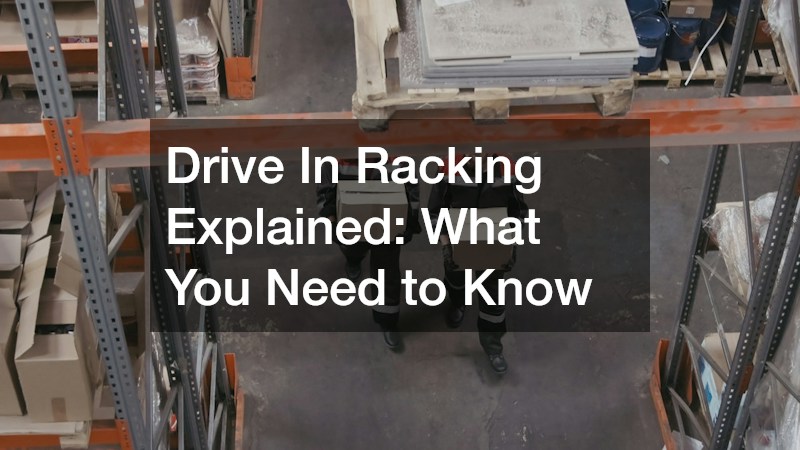
Drive-in racking systems are a type of storage solution that greatly maximizes storage density by minimizing the aisles between the racks. They are designed to allow forklifts to drive directly into the lanes of stacked rows, facilitating the straightforward loading and unloading of goods.
These racking systems utilize the system of “Last In, First Out” (LIFO), where the last item stored is the first to be retrieved. This makes them particularly suitable for products that are not time-sensitive.
The Significance of High-Density Storage
The significance of drive-in storage systems lies in their ability to drastically reduce the storage footprint without compromising on accessibility. In scenarios where storage space constitutes a critical cost, optimizing every available square foot becomes essential. These racks contribute to this by eliminating unnecessary aisles, thereby increasing storage capacity. They enable businesses to store multiple pallets of the same item in high-density spaces, making them ideal for warehousing operations that handle large volumes of like items.
Applications in Modern Warehouses
Drive-in storage systems find their applications across a myriad of industries. Any business dealing with large quantities of homogeneous products, such as food and beverage, automotive parts, and retail inventory, can benefit significantly from this storage system. For instance, industries like food manufacturing and cold storage facilities, which often store bulk quantities of similar products for later dispatch, greatly rely on the efficiency provided by these racks.
Benefits of High-Density Pallet Storage
Employing these systems in a warehouse brings about a multitude of benefits, such as:
-
Space Utilization: Maximizes vertical and horizontal space, making them more efficient than traditional pallet racking systems.
-
Cost Efficiency: By optimizing space, businesses can reduce the need for additional warehousing facilities.
-
Structural Safety: Designed with durable materials to withstand multiple loads, ensuring a safe workplace.
-
Flexible Configuration: Easily adjustable configurations to accommodate different pallet sizes and storage needs.
In conclusion, these storage systems represent an indispensable solution for any industrial operation where storage capacity is matched only by operational efficiency. Understanding and implementing them can play a crucial role in enhancing logistical performance, ensuring that products are stored safely and efficiently, and ultimately supporting business growth.
What Is This Storage System?
Drive in racking is a high-density storage solution, operating by minimizing aisle space and using the ‘last in, first out’ (LIFO) method. It is ideal for storing large volumes of homogeneous products and is designed for industries prioritizing space optimization. The system relies on forklifts for loading/unloading and stacking pallets on cantilevered rails. It is adaptable to specific warehouse specifications, offering a strategic advantage where stock rotation is less critical.
The evolution of drive in racking stems from industrial needs for efficient storage. Over decades, advancements in material handling and storage technology improved its complexity and capacity. Modern racking systems feature state-of-the-art designs and integrate technology for precise inventory management.
The structure includes uprights supporting the system, cantilevered rails for pallets, and interconnected beams for stability. Safety is enhanced with floor guides and bumpers, while ancillary fixtures protect the system from collisions. This modular system is practical and efficient, optimizing space use and load capabilities.
Compared with selective, push-back, or pallet flow racking, this storage solution maximizes storage density but limits direct pallet access. It suits environments prioritizing space efficiency over retrieval speed, unlike systems like push-back or flow racking, which enhance inventory rotation.
Drive in racking is used in industries requiring storage for large, homogeneous product batches, such as cold storage or beverage production. It efficiently manages bulk inventory, aligning with economic goals by optimizing space and reducing operational costs.
How Does the System Work?
The LIFO method drives the system, storing pallets on rails in a bay, prioritizing storage capacity over ease of access. Forklifts manage load/retrieval, requiring precise maneuvering to consolidate storage processes.
This system enhances storage density and reduces costs through increased efficiency. It is scalable, adaptable, and cost-effective, benefiting SMEs optimizing logistics without expanding space.
Drive in racking limits direct access to pallets, complicating operations needing frequent product rotation. It requires skilled handling of forklifts in confined spaces, which can increase costs due to training and potential damage risks.
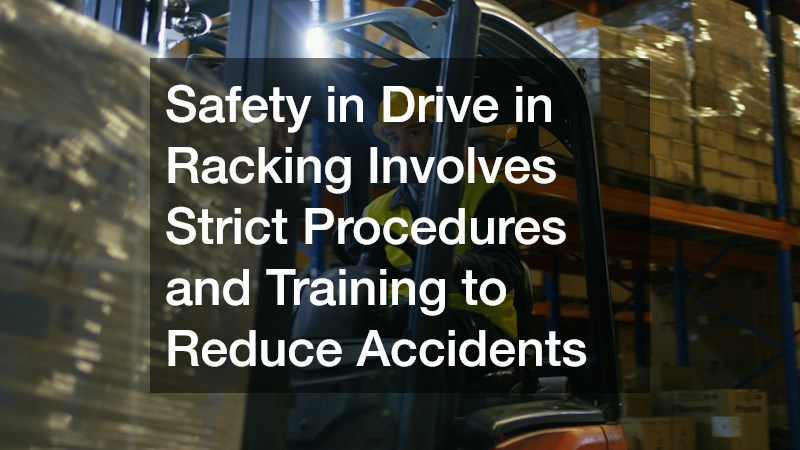
Safety in drive in racking involves strict procedures and training to reduce accidents. Operators must maneuver forklifts skillfully, adhering to specified limits, and ensure regular maintenance for a safe environment.
Installation begins with assessing warehouse needs and involves precise on-site assembly. Post-installation checks ensure functionality, requiring training for efficient operation and facilitating system optimization.
What Are the Benefits of This Storage Solution?
This system maximizes storage space by reducing aisles, allowing substantial inventory accommodation without expanding warehouse footprints. This versatility adapts to spatial constraints, improving operational efficiency.
It also lowers operational costs by optimizing space and streamlining processes. It offers continued savings through reduced maintenance and labor costs, boosting profitability.
These systems promote orderly storage processes, enhancing workflow efficiency and supporting fast-paced industrial environments.